The Vedic Inner Codex: Decoding Biological Creation through Yogic Consciousness and Vedic Symbolism
Abstract

My name is Vishnu Karanam and my research proposes that the ancient Indian scriptures — particularly the Vedas and associated yogic texts — are not mythological or allegorical in nature but are codified records of inner biological perception. Drawing from yogic epistemology, Sanskrit etymology (Nirukta), and modern biology, this study introduces the concept of the “Vedic Inner Codex” — a symbolic system embedded in Vedic literature that encodes microcosmic biological creation as perceived in states of deep meditative absorption (samadhi). Through a single-subject experimental design, the researcher will systematically study classical texts, map Vedic symbols to biological processes, and then visualize these symbols meditatively while tracking subjective and physiological changes. The research aims to validate inner perception (e.g., witnessing an “Inner Big Bang”) as a cognitive instrument, reinterpret Sanskrit symbols as structured biological encodings, and demonstrate that meditative visualization of these symbols can produce measurable changes in physiological states. Ultimately, this work bridges ancient inner science with modern biology and consciousness studies and contributes to the revival of India’s spiritual-intellectual heritage through the proposed Rise of Kalki initiative.
Preamble
The ancient scriptures of India are often misunderstood as mythology or religious poetry. This research repositions them as codified systems of inner science, containing precise symbolic descriptions of microcosmic biological processes, perceived through heightened meditative states like samadhi. When the mind is stilled and consciousness is sharpened, the seer witnesses an “Inner Big Bang”: a hyper-realistic, first-hand perception of internal biological creation, sustenance, and dissolution. Only after this foundational vision do symbols like gods, demons, planets, rituals, and yagnas appear as interpretive encodings of what has been witnessed.
This proposal seeks to revive this yogic mode of perception, decode Vedic symbols through biological and Sanskrit analysis, and reframe Indian scriptures as living manuals of consciousness-based biology.
Introduction
The Vedas are often studied for their linguistic, philosophical, or ritual value. This research proposes a radically different reading: that they preserve the subjective perception of biological creation as directly experienced by ancient seers. In the state of samadhi, the meditator perceives internal creation processes with vivid clarity. These were then symbolically encoded as gods, rituals, and cosmic events. This encoded knowledge system is what we call the Vedic Inner Codex.
This project positions the Vedas not as allegory but as structured records of biological insight obtained through inner observation. The aim is to bridge modern biological understanding with ancient spiritual insight through rigorous interdisciplinary analysis and self-experimentation.
Research Problem
Despite extensive study of the Vedas, few attempts have been made to decode them as scientific records of inner biological phenomena. The problem is threefold:
- Interpretation: Vedic symbols are read as myth, not functional biological metaphors.
- Epistemology: Inner perception (e.g., samadhi) is not recognized as a valid source of knowledge.
- Validation: No study has tested whether meditating on Vedic symbols can influence biological states.
Research Question:
Can ancient Indian scriptures be decoded as structured records of subjective biological perception, and can such symbolic knowledge be epistemically and biologically validated?
Core Concept
The core premise: In the heightened state of samadhi, subjective consciousness becomes an instrument of direct perception, revealing a vivid and structured unfolding of inner biological creation.
This perception begins with an “Inner Big Bang” — directly witnessing energy flows, cellular emergence, and biological rhythms. Only after this are symbolic visions formed (gods, weapons, planets), functioning as interpretive overlays to preserve and transmit experiential knowledge.
Objectives
Objective 1: Decode Vedic Symbolism into Biological Meaning
- Systematically extract and document over 100 Vedic symbols, including deities, cosmic elements, yagnas, and weapons, from primary texts such as the Rig Veda and Upanishads.
- Analyze these symbols using etymology (Nirukta) and contextual references to uncover their original energetic or functional meaning.
- Map each symbol to corresponding biological, cellular, or energetic functions (e.g., Agni = metabolic fire, Soma = hormonal regulation, Indra = immune response).
- Construct a visual and conceptual lexicon connecting Sanskrit symbols with biological structure and function.
Objective 2: Justify Inner Perception (Samadhi) as a Scientific Tool
- Explore foundational Yogic epistemology (pratyaksha – direct perception, sabda – scriptural authority, and samyama – integrated meditative cognition).
- Compare and contrast these epistemic tools with frameworks from neurophenomenology and first-person science.
- Argue that samadhi is not mystical trance, but a structured cognitive mode capable of yielding reliable experiential data on internal phenomena.
- Establish criteria under which inner perception can be treated as a valid observational methodology.
Objective 3: Validate Effects of Symbolic Visualization
- Design and implement a meditation protocol using the mapped symbols from Objective 1.
- Use wearable devices to track HRV, breath rate, and sleep, and collect subjective data through structured journaling.
- Conduct 7–14 day cycles for each symbol to evaluate biological and emotional responses.
- Analyze trends to determine whether specific Vedic symbols, when visualized, consistently influence measurable physiological markers.
Objective 4: Reframe Vedas as Bio-Spiritual Science
- Demonstrate that Sanskrit, through its roots (dhatus), phonemes, and meter, acts as a precise encoding tool for conveying inner experiential knowledge.
- Position the Vedas as systematic internal science texts, with layered metaphors designed to preserve inner biological and energetic observations across generations.
- Synthesize insights into a new interpretive paradigm: the Vedic Inner Codex — a symbolic framework linking consciousness, language, biology, and ritual.
- Offer this paradigm as a foundation for further research in yogic science, consciousness studies, and symbolic medicine.
Hypotheses
Primary Hypotheses:
- Symbolic Hypothesis: The figures, rituals, and cosmic motifs in the Vedas — such as gods like Indra or Agni, or rituals like the Soma sacrifice — are not mythological constructs but symbolic representations of specific internal biological and energetic processes. These symbols serve as encoded knowledge systems that reflect microcosmic physiology, such as immune responses, cellular metabolism, or hormonal cycles.
- Perceptual Hypothesis: In advanced meditative states such as samadhi, practitioners gain the ability to directly observe inner biological events. This perception is not metaphorical but vivid and structurally coherent — including visions of cellular dynamics, energetic flows, or the cycles of creation and dissolution, akin to observing an ‘Inner Big Bang.’
- Causal Hypothesis: When Vedic symbols are used intentionally during meditation — visualized with clarity and focus — they trigger changes in the meditator’s physiological state. This includes measurable shifts in heart rate variability (HRV), cortisol levels, cytokine activity, and brainwave coherence, suggesting a causal link between symbolic cognition and biological regulation.
- Epistemic Hypothesis: The inner observational methods described in yogic traditions — particularly samyama — represent a valid epistemological mode. These methods provide structured, replicable insight into consciousness and biology, comparable to the first-person methodologies emerging in neurophenomenology.
Secondary Hypotheses:
- Repeated meditation on specific Vedic symbols strengthens neural pathways and induces neuroplasticity, particularly in regions involved in interoception and focused attention.
- Chanting or internalizing Sanskrit mantras generates vibrational resonance that interacts with the body’s energetic and physiological systems, producing observable biological effects.
- Across various Vedic, Upanishadic, and yogic texts, there is a cross-symbolic consistency that aligns with universal biological themes such as polarity, transformation, and cyclical renewal, suggesting a deep semantic-biological encoding across the corpus.
Research Methods and Methodology
Methodology:
This research is grounded in a qualitative, interpretive methodology from yogic epistemology (e.g., pratyaksha, sabda, samyama) and first-person neurophenomenology. It treats consciousness not as a byproduct of biology, but as the observer and revealer of biological creation, particularly in deep meditative states like samadhi.
Key principles include:
- Inner perception as a scientific instrument: In the state of samadhi, the practitioner accesses a heightened awareness capable of observing microcosmic biological events — such as cellular division, hormonal surges, immune responses, or energetic flow — with hyper-realistic clarity. This subjective perception is considered repeatable and structured, allowing it to be used as a valid internal observational method.
- Symbolism as encoding: Vedic symbols — including deities like Agni or rituals like the Soma yagna — are not abstract metaphors but cognitive encodings derived from real inner phenomena. Each symbol is a compact, resonant container of experiential knowledge about inner processes. For example, battles between gods and asuras may represent immune conflicts, while fire rituals may symbolize metabolic activation.
- Single-subject design: The Researcher serves as the test subject, mirroring the Rishi tradition. Following the ancient Indian model of Rishi scientists, the researcher serves as both observer and observee, using their own body and consciousness as the experimental field. This introspective framework allows for direct, deeply personal, and uninterrupted exploration of symbolic and biological correspondences.
- Cross-disciplinary integration: This project draws from at least sixteen disciplinary perspectives — including Sanskrit linguistics, yogic psychology, cellular and molecular biology, neurophenomenology, and Indian epistemology — to construct a cohesive methodology for decoding the Vedic Inner Codex. This holistic approach enables the simultaneous alignment of spiritual insight, symbolic meaning, and biological structure.
Central to this methodology is the experiential hypothesis that in deep states of samadhi, the meditator witnesses a hyper-realistic unfolding of inner creation — a process termed the “Inner Big Bang.” This perception precedes symbolic interpretation, which becomes a cultural framework for encoding the raw experience.
Methods
This study will proceed in four structured phases, combining scriptural analysis, symbolic meditation, self-tracking, and cross-disciplinary synthesis:
Phase 1: Foundational Research and Planning
- Scriptural Study: Deep reading of primary Vedic and yogic texts (Rig Veda, Upanishads, Yoga Sutras, Brahma Sutras, Shiva Samhita), focusing on verses and mantras pertaining to creation, perception, transformation, and inner vision.
- Symbol Identification: Extraction and cataloging of over 100 symbolic elements including deities, cosmic actions, rituals, and mythic sequences.
- Scientific Research: Review of cellular biology, molecular biology, immunology, neurobiology, and consciousness studies to construct plausible mappings between Vedic symbols and biological phenomena.
- Linguistic Analysis: Use Nirukta (Vedic etymology) to deconstruct Sanskrit terms and interpret their semantic resonance with biological and energetic functions.
- Lexicon Development: Begin construction of a Symbol-to-Biology Lexicon that aligns Vedic symbols with internal bodily processes, complete with references, hypothesized mappings, and traditional interpretations.
Phase 2: Inner Experimental Practice (Single-Subject Design)
- Symbolic Meditation Protocol: Establish a systematic meditation practice using selected Vedic symbols and mantras, paired with breath regulation and focused visualization techniques.
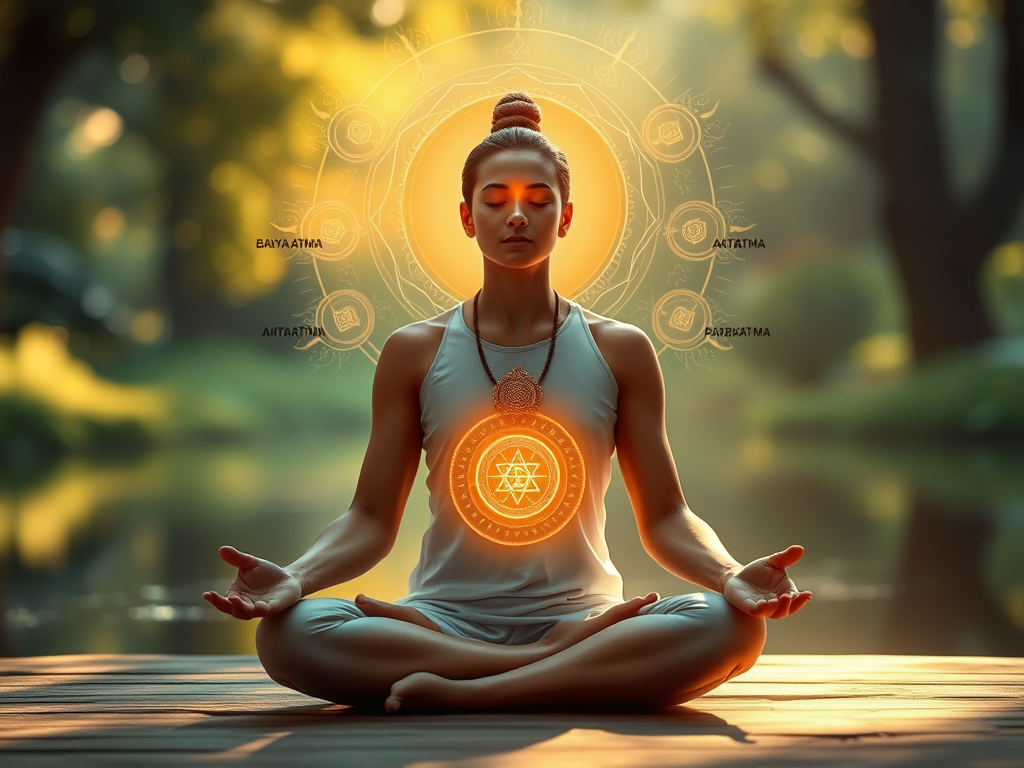
- Inner Observation: Enter meditative states daily with the intention of witnessing the “Inner Big Bang” — the onset of inner creation — and observe symbolic emergence in real time.
- Phenomenological Logging: Immediately after each session, record detailed subjective data including internal imagery, energetic shifts, emotional states, and perceived biological sensations.
- Yogic Stabilization Techniques: Utilize dharana (concentration), dhyana (absorption), and samyama (deep meditative integration) to reinforce clarity and stability of symbolic perception.
Phase 3: Self-Observation and Physiological Tracking
- Objective Data Collection: Use biometric devices (e.g., HRV monitors, breath sensors, sleep trackers) to measure physical changes during and after meditation cycles.
- Subjective Journaling: Maintain a structured journal capturing daily reflections, symbols visualized, energetic insights, and emotional/cognitive shifts.
- Cycle Design: Structure meditation into 7–14 day cycles per symbol, with pre-cycle baselines and post-cycle evaluations to identify consistent physiological or psychological patterns.
Phase 4: Comparative Analysis and Synthesis
- Symbol–Biology Audit: Assess whether specific Vedic symbols correlate with recurring physiological or experiential effects.
- Scriptural Cross-Referencing: Compare meditative experiences with traditional descriptions and commentaries in the Vedas and Upanishads.
- Multidomain Synthesis: Integrate findings with modern scientific research, Yogic philosophy, Sanskrit etymology, and neurophenomenological models.
- Final Outputs:
- Symbol-to-Biology Lexicon (with empirical and scriptural validation)
- Meditative Insight Reports and Inner Big Bang documentation
- Physiological Tracking Charts
- Epistemological Essay on subjective cognition as scientific method
- Codex Framework Diagram modeling the symbolic-biological-perceptual process
Expected Outcomes
- Formalization of the Vedic Inner Codex Framework: A structured, interdisciplinary model that decodes Vedic symbolism into biological meaning, validated through meditative perception, scriptural cross-analysis, and physiological tracking. This will include a published Symbol-to-Biology Lexicon, providing scholars and practitioners with a new interpretive lens.
- Empirical Evidence for Meditative Cognition: A detailed data set illustrating how symbolic visualization during meditation can induce measurable changes in physiological states such as heart rate variability, stress markers, and subjective clarity. This outcome would establish a scientific precedent for treating inner perception as a valid mode of observation.
- Interdisciplinary Integration Blueprint: A comprehensive synthesis of Sanskrit linguistics, yogic epistemology, modern biology, and consciousness studies, demonstrating how ancient symbolic systems can inform contemporary science and vice versa. This alignment will offer a foundation for new collaborations across domains.
- Public Access and Educational Tools: Development of experiential meditation protocols, visual frameworks, and interpretive guides for the general public. These tools will help individuals apply the Vedic Inner Codex in their personal practice while encouraging further experimentation in the field of inner science.
Conclusion
I am no one — just a regular guy next door who unfortunately (or perhaps fortunately) fell into this vast sea of knowledge. With a pot full of curiosity and a head full of questions, I stepped into the Vedas knowing I may never find all the answers I seek. I don’t dare to change the world, nor am I qualified or destined to be someone great. I am no one.
But I firmly believe that the knowledge preserved in the Vedas once gave birth to the golden age of Bharat, and it can do so again. No one truly knows the depth of what is preserved in these scriptures. You cannot fully grasp the power of this knowledge simply by being taught; its essence must be lived, perceived, and realized from within, as the ancients intended.
This attempt of mine may amount to nothing. I might fail. So be it. If that is my destiny, I accept it with folded hands. But if through this effort, I can spark even one question in your heart — just one flame of inquiry that has long been waiting to be lit — then I have already won.
And in that moment, Bharat begins again. Kalki in you is born.
This proposal asserts that the Vedas are not abstract mythology but codified inner science. Through decoding symbolic language, validating meditative perception, and correlating findings with biology, this research restores the Vedic tradition as a living system of embodied, experiential knowledge — the blueprint for an inner biology that consciousness can access, map, and evolve. But codified inner science. Through decoding symbolic language, validating meditative perception, and correlating findings with biology, this research restores the Vedic tradition as a living system of embodied, experiential knowledge — the blueprint for an inner biology that consciousness can access, map, and evolve.




 Rise of Kalki