
The subtlety of Atman is often illustrated through metaphors that emphasize its minuteness and elusiveness. It is said that one can concentrate on Atman as something as small as:
- A cow’s footprint on the ground.
- A grain of rice.
- A tiny part of one-thousandth of the tip of a hair.
These images highlight that Atman is not a gross object but a subtle presence that requires refined awareness and concentration to perceive. This subtlety invites practitioners to cultivate patience and precision in their spiritual efforts.
Yogic Practices for Realizing Atman
Realizing Atman is not an intellectual exercise but an experiential journey that involves the purification and mastery of the body, breath, and mind. Yogic practices provide the tools to achieve this transformation.
Prana and Apana: The Vital Energies
Within the yogic framework, two vital energies govern the subtle body:
- Prana: The inward-moving life force associated with inhalation and the reception of energy.
- Apana: The outward-moving energy linked to exhalation and elimination.
Balancing and uniting prana and apana is essential for spiritual awakening. When these energies flow harmoniously, the practitioner experiences increased vitality, mental clarity, and readiness for deeper meditation.
Kumbhaka: Breath Retention
Kumbhaka is the practice of holding the breath after inhalation (antara kumbhaka) or exhalation (bahya kumbhaka). This breath retention:
- Stabilizes the flow of prana and apana.
- Calms the mind and prepares it for concentration.
- Opens the door to higher states of awareness by stilling the fluctuations of the breath and mind.
Through regular practice of kumbhaka, the yogi gains control over the vital energies, which is a prerequisite for awakening the dormant spiritual energy known as Kundalini.
Samadhi: The State of Meditative Absorption
Samadhi is the pinnacle of yogic meditation, a state of profound absorption where the mind becomes completely still and merges with the object of meditation—in this case, the Atman. In samadhi:
- The duality between the meditator and the object dissolves.
- The practitioner experiences unity with Atman beyond all mental modifications.
- This state brings deep peace, bliss, and insight into the true nature of existence.
Samadhi is not merely a trance but a transformative experience that reveals the eternal reality of Atman.
Kundalini Awakening and Chakra Piercing
At the base of the spine lies the dormant spiritual energy called Kundalini, often depicted as a coiled serpent. Through yogic practices such as pranayama, meditation, and kumbhaka, Kundalini is awakened and begins its ascent through the central energy channel, the Sushumna nadi.
As Kundalini rises, it pierces the seven main chakras (energy centers):
- Muladhara (Root Chakra): Foundation of physical and spiritual energy.
- Svadhishthana (Sacral Chakra): Center of creativity and emotions.
- Manipura (Solar Plexus Chakra): Seat of personal power and will.
- Anahata (Heart Chakra): Source of love and compassion.
- Vishuddha (Throat Chakra): Expression and communication.
- Ajna (Third Eye Chakra): Intuition and insight.
- Sahasrara (Crown Chakra): The thousand-petalled lotus representing pure consciousness.
Each chakra pierced by Kundalini awakens new levels of awareness and spiritual power, cleansing and energizing the subtle body.
Sahasrara: The Seat of Pure Consciousness
The final destination of Kundalini’s ascent is the Sahasrara chakra, located at the crown of the head. This chakra symbolizes the highest state of consciousness and union with Paramatma.
Upon reaching Sahasrara, the yogi experiences:
- The direct realization of Atman’s attributes: bliss, knowledge, and eternal peace.
- Transcendence of all dualities and limitations of the physical and mental realms.
- A profound sense of unity with the cosmos and the ultimate reality.
This state marks the culmination of the yogic journey toward self-realization.
Benefits of Realizing Atman
The realization of Atman brings transformative benefits:
- Freedom from Suffering: Understanding the eternal nature of Atman dissolves fear of death and attachment to transient phenomena.
- Inner Bliss and Peace: The yogi experiences unshakable joy and tranquility beyond external circumstances.
- Clarity and Wisdom: Insight into the true nature of reality leads to compassionate and wise living.
- Detachment and Equanimity: The practitioner remains balanced amidst life’s ups and downs, seeing all as expressions of the same Atman.
These benefits are not theoretical but lived realities for those who attain Atman realization.
Conclusion
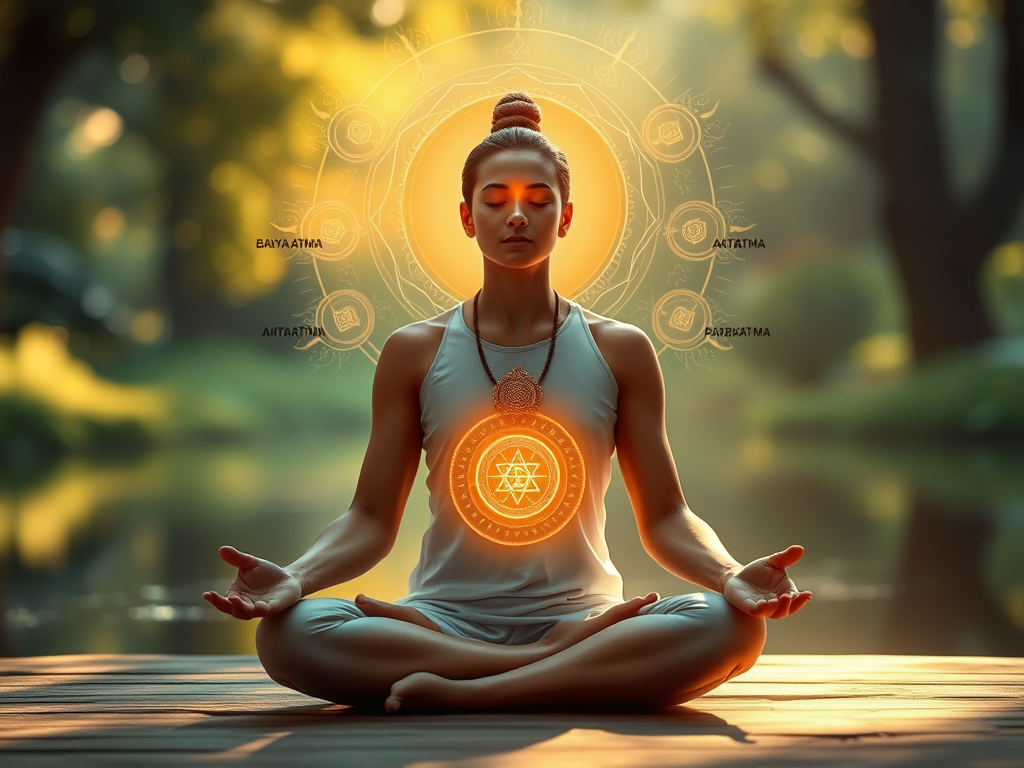
The journey to realize Atman is a profound and transformative path that transcends intellectual understanding. By recognizing the layered nature of Atman—Bahya Atma, Antaratma, and Paramatma—and engaging in yogic practices such as prana and apana control, kumbhaka, meditation, and Kundalini awakening, seekers can experience the eternal bliss and knowledge that Atman embodies.
This realization deepens not only spiritual insight but also enriches the experience of life itself, revealing love, emotions, and consciousness as reflections of the subtle, unchanging Atman within. The path of yoga offers a practical and profound means to unveil this hidden Self and live in harmony with the ultimate truth.



 Rise of Kalki
Leave a comment