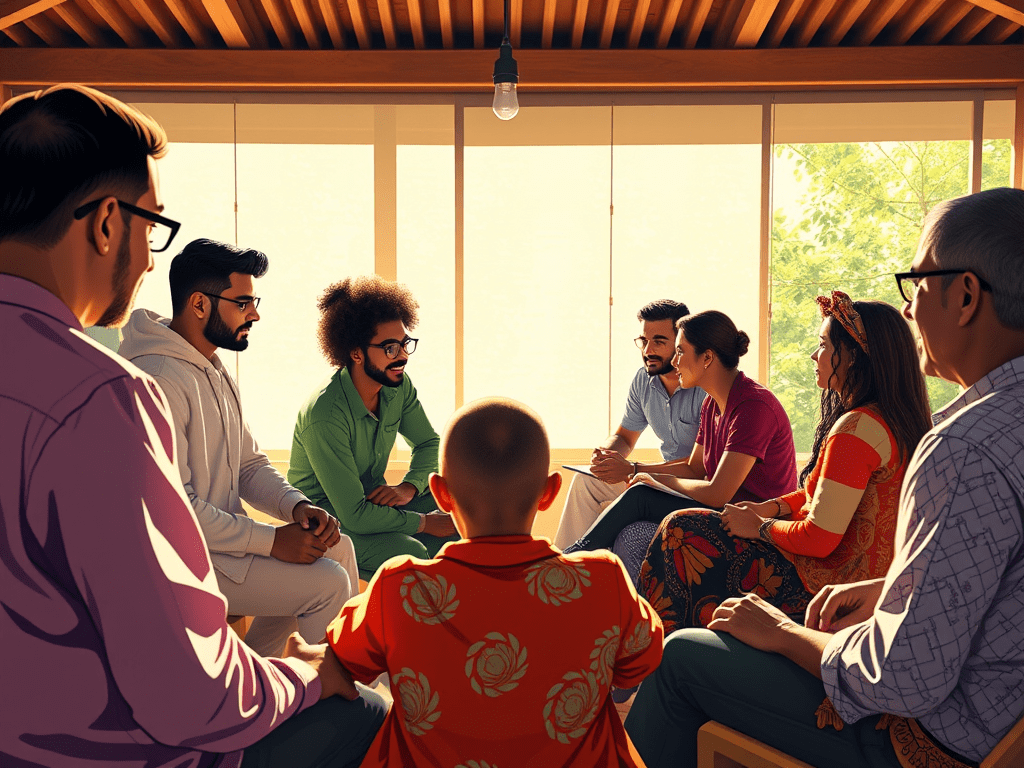
In an era marked by rapid change and complex global challenges, the need for inclusive, transparent, and reasoned dialogue has never been greater. Imagine a world where people from every corner of the globe can come together in structured, meaningful debates—sharing ideas, resolving conflicts, and co-creating solutions. This vision can be realized by combining the ancient wisdom of decentralized governance with modern organizational innovation: Holacracy.
What is Holacracy?
Holacracy is a revolutionary approach to organizational management that replaces traditional hierarchies with self-organizing teams called “circles.” Each circle has clear roles and responsibilities, and authority is distributed throughout the organization. This system fosters agility, transparency, and empowerment, making it an ideal foundation for a global debate framework.
Why a Global Debate Framework?
Debate is more than just argument; it is a powerful tool for learning, understanding, and decision-making. Traditional debate formats often exclude many voices or become arenas for conflict rather than collaboration. A Holacracy-based global debate framework can overcome these limitations by:
- Encouraging participation from diverse cultures and perspectives
- Ensuring transparent and fair processes
- Adapting dynamically to changing needs and contexts
- Empowering individuals and communities to engage meaningfully
Designing the Framework: The Circle Structure
At the heart of this framework lies a multi-tiered structure of circles, each responsible for different scopes and themes:
- Global Circle: Sets universal principles, ethical guidelines, and strategic goals. Coordinates international partnerships and global initiatives like climate action or human rights.
- Regional Circles: Represent continents or large geopolitical areas, adapting global policies to regional cultures and languages. Organize regional debates and foster collaboration.
- National Circles: Manage country-specific debates, tailoring regional directives to national contexts and engaging policymakers and citizens.
- Local Circles: Operate at community or city levels, encouraging grassroots participation and organizing local events.
- Thematic Circles: Focus on specific global issues such as education, health, technology, and governance, bringing together experts and stakeholders worldwide.
Roles Within Circles
Each circle functions through clearly defined roles to maintain order and accountability:
- Lead Link: Connects the circle to its parent, assigns roles, and manages resources.
- Rep Link: Represents the circle in the parent circle, conveying feedback and concerns.
- Facilitator: Guides meetings, ensures adherence to debate protocols, and fosters inclusive participation.
- Secretary: Records minutes, decisions, and action items.
- Content Curator: Manages debate materials and archives.
- Participants: Engage actively in debates, propose topics, and provide feedback.
Meetings: Governance and Tactical
- Governance Meetings: Regular sessions where circles review and update roles, policies, and processes using integrative decision-making to incorporate diverse perspectives.
- Tactical Meetings: Focus on day-to-day operations, planning debates, resolving issues, and coordinating activities.
The Digital Platform: The Backbone of Global Engagement
A sophisticated digital platform is essential to connect participants worldwide:
- Multilingual Support: Real-time translation to bridge language barriers.
- Virtual Debate Rooms: Organized by circle structure for focused discussions.
- Role-Based Access: Ensures appropriate permissions and responsibilities.
- Integrative Decision-Making Tools: Facilitate structured proposal, objection, and resolution processes.
- Archival System: Stores transcripts, recordings, and resources for transparency and learning.
- AI-Assisted Moderation: Detects fallacies, manages disruptions, and supports fair discourse.
- Accessibility: Designed for users with disabilities and varying technology access.
- Security & Privacy: Robust data protection and user privacy safeguards.
Protocols and Training
To maintain quality and fairness:
- Global Protocols: Universal standards for respectful, evidence-based, and inclusive debate.
- Localized Adaptations: Cultural and legal modifications respecting regional norms.
- Training Programs: Workshops on critical thinking, Holacracy governance, debate skills, and cross-cultural communication.
- Certification: Recognize skilled facilitators and participants.
Inclusivity and Diversity
The framework prioritizes:
- Proactive Outreach: Engaging marginalized and underrepresented groups.
- Partnerships: Collaborations with NGOs, educational institutions, and community organizations.
- Equity Measures: Ensuring equal opportunity regardless of socio-economic status, gender, ethnicity, or geography.
Pilot and Scale
- Pilot Phase: Launch in diverse regions to test technology, governance, and cultural fit.
- Evaluation: Collect data and feedback to refine the system.
- Scaling: Gradual expansion with continuous improvement.
Conclusion: Towards a Renaissance of Global Dialogue
By architecting a Global New Age Debate Framework grounded in Holacracy principles, we can foster a resilient, inclusive, and dynamic culture of dialogue. This empowers individuals and communities worldwide to collaboratively navigate complex challenges, promote mutual understanding, and co-create solutions for a sustainable and just future.
The decentralized, transparent, and adaptive nature of this framework honors the diversity of human experience while uniting us in the shared pursuit of truth and progress. Through this global endeavor, the spirit of reasoned debate and collective wisdom can shine as a beacon for generations to come.



 Rise of Kalki
Leave a comment