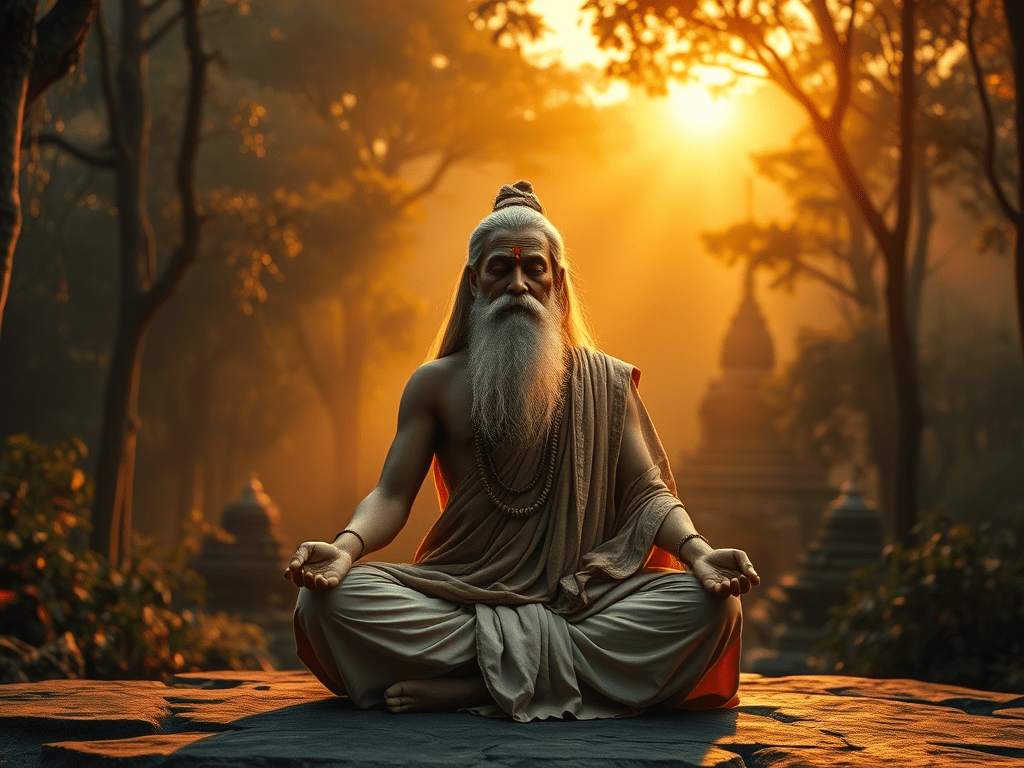
In the vast ocean of spiritual traditions, the figure of the Guru stands as a beacon of light, guiding seekers from the darkness of ignorance to the radiant realization of their true Self, the Ātman, and the ultimate reality, Brahman. Rooted deeply in the ancient wisdom of the Upanishads and echoed in various spiritual texts, the Guru is far more than a mere teacher. The Guru is a realized being who has traversed the arduous path of self-discovery and now imparts the sacred knowledge and grace necessary for liberation. This blog post explores the profound journey of the Guru, their essential qualities, and the enduring relevance of the Guru-disciple relationship in today’s world.
The Journey from Seeker to Realized One
Every Guru begins as a seeker, an earnest aspirant on the spiritual path. This journey is marked by rigorous practices—self-discipline, austerity, meditation, and self-restraint—that gradually purify the mind and awaken the inner light. The Kena Upanishad beautifully captures this transformative process, likening Brahman to a flash of lightning or the winkling of an eye, a subtle reality that the mind glimpses and continually remembers. The seeker’s repeated study and meditation on Brahman, as emphasized in the Brahma Sutras, serve to burn away ignorance and unfamiliarity with the Self, leading to moksha, or liberation.
The Yoga-Kundalini Upanishad further elaborates on this journey, describing the realized one as one who has crossed the ocean of Samsara—the endless cycle of birth and death—and attained the state of Jivanmukta, liberated while alive. Ultimately, the final liberation, Videhamukta, is achieved after death, merging the individual soul with Para-Brahman, the supreme consciousness.
The Guru as the Realized Knower of Brahman
What distinguishes a Guru from an ordinary teacher is this direct realization of the immutable, undifferentiated light of the Atman within the body. The Guru embodies the truth of Brahman and serves as a living example of spiritual attainment. The Nirvana Upanishad describes the Guru as one who purifies, grants Godhood, and is revered by the wise as the ultimate source of fulfillment. Such a Guru is free from doubts and worldly attachments, reflecting a profound commitment to spiritual truth.
This realization is not merely intellectual but experiential, a deep knowing that transcends concepts and dualities. The Guru’s presence itself is transformative, capable of awakening the dormant potential within the disciple.
The Sacred Role of Initiation
One of the most vital functions of the Guru is initiation, or Diksha. Through this sacred act, the Guru imparts the mantra—the root of spiritual knowledge and power—to the disciple. The Mundaka Upanishad highlights the importance of this transmission, noting that Brahman’s knowledge is to be given only to those who are disciplined, devoted, and prepared.
The Yoga-Kundalini Upanishad speaks of the Guru’s role in breaking the brahmarandra, the crown chakra, symbolizing the opening of the highest spiritual center and the revelation of Brahma Jnana, the knowledge of the supreme Self. This act signifies the disciple’s transcendence beyond the cycle of birth and death, facilitated by the Guru’s grace.
The Nirvana Upanishad reinforces this, emphasizing that the Guru-disciple relationship continues until the disciple attains moksha, underscoring the Guru’s indispensable role in the spiritual journey.
Transmission of Potent Knowledge
The knowledge imparted by the Guru is potent and essential for spiritual success. The Shiva Samhita warns that without the Guru’s knowledge, efforts on the path would be fruitless and painful. The Guru is revered as the embodiment of father, mother, and deity, deserving of service through actions, mind, and speech.
The Mundaka Upanishad reiterates that this sacred knowledge is to be imparted only to worthy disciples who have fulfilled their vows and are devoted to the path. The Guru’s teachings are not mere intellectual concepts but living wisdom that transforms the disciple’s consciousness.
Responsibilities of the Guru and the Disciple
The Guru’s responsibilities extend beyond teaching; the Guru purifies the disciple, removes karmic bonds, and leads them toward liberation. The Tirumantiram describes the Guru as one who assesses the worth of disciples and bestows grace upon those who are pure and sincere. The Guru is likened to Siva Himself, standing as a divine presence that transforms the disciple into a realized being.
Conversely, the scriptures warn against false Gurus who lack true knowledge and humility. Such Gurus mislead disciples and cause spiritual harm. The Mundaka Upanishad advises that disciples must be pure in mind, control their senses, and be free from false notions to receive the Guru’s knowledge effectively.
The disciple’s role is equally important. Humility, obedience, and constant practice under the Guru’s guidance are essential for spiritual progress. The Tirumantiram emphasizes that a true disciple humbles themselves before the renunciate Vedantin and follows the path of renunciation and knowledge with devotion.
The Enduring Relevance of the Guru-Disciple Relationship
In today’s fast-paced and often fragmented world, the timeless wisdom of the Guru-disciple relationship remains profoundly relevant. The Guru provides not only knowledge but also the grace and support necessary to navigate the complexities of spiritual practice. The sacred bond fosters discipline, devotion, and transformation, enabling seekers to transcend ignorance and realize their true nature.
The Upanishads and related texts remind us that the path to liberation is not solitary; it is illuminated by the presence of a realized Guru who has walked the path and can guide others safely across the ocean of Samsara.
Conclusion
The Guru is the indispensable guide on the spiritual path—a realized being who has overcome the struggles of the journey and attained direct knowledge of Ātman and Brahman. Through initiation and grace, the Guru breaks the cycle of samsāra and imparts the sacred knowledge that leads to liberation. The sacred Guru-disciple relationship, founded on purity, devotion, and mutual responsibility, remains the supreme spiritual authority and the key to the realization of the ultimate truth.




 Rise of Kalki
Leave a comment