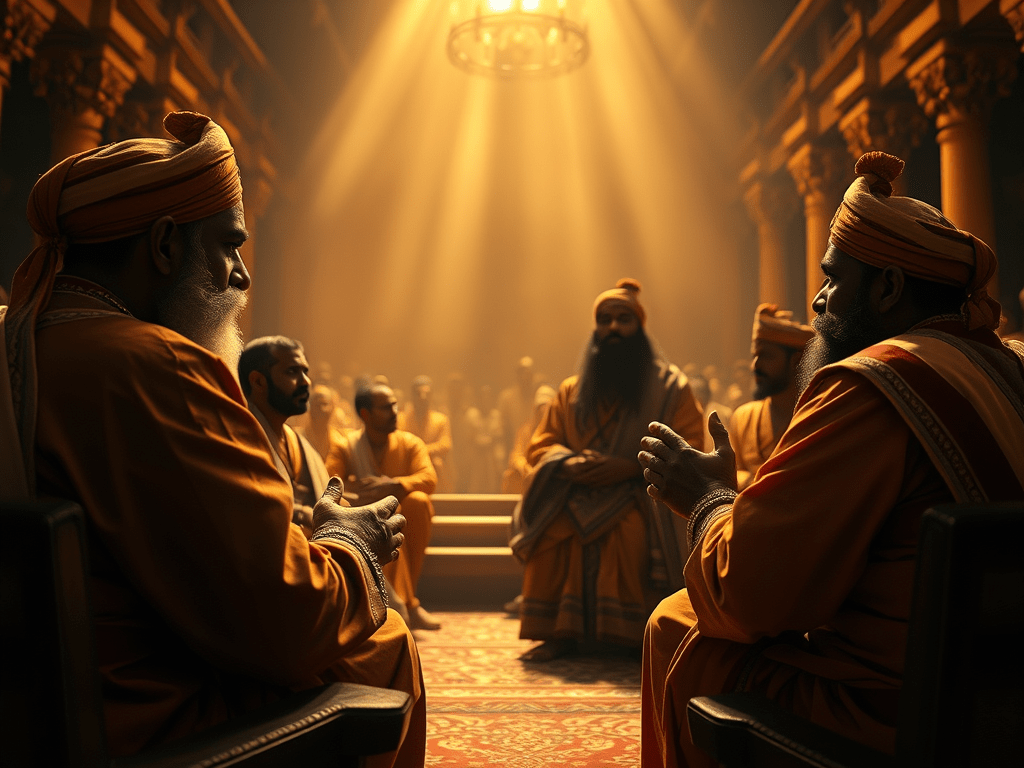
In the annals of India’s illustrious past, the Golden Age of Bharat stands out as a period of extraordinary intellectual and cultural flourishing. Central to this era was a unique and rigorous style of examination—debate. Unlike today’s reliance on written tests and multiple-choice questions, ancient scholars and students engaged in live, dynamic debates to test knowledge, sharpen reasoning, and uncover truth. This tradition, deeply rooted in the Nyaya Sutra, laid the foundation for a vibrant culture of inquiry and wisdom.
The Nyaya Sutra: Blueprint of Logical Debate
Composed by the sage Gotama, the Nyaya Sutra is a seminal text that codifies the principles of logic, epistemology, and dialectics. At its heart are sixteen categories that guide the seeker through the process of acquiring, validating, and defending knowledge. These categories are not mere abstract concepts but practical tools designed for the art of debate—the ancient examination method.
Why Debate Was the Ultimate Examination
In the Golden Age of Bharat, knowledge was not simply memorized; it was lived, questioned, and defended. Debate served multiple purposes:
- Active Engagement: Students and scholars actively participated in intellectual exchanges, fostering deep understanding.
- Critical Thinking: Debates required sharp reasoning, clarity of thought, and the ability to respond to challenges.
- Truth-Seeking: The goal was not victory for its own sake but the discovery of truth through reasoned argument.
- Community Learning: Debates were public, involving peers and teachers, creating a collective pursuit of knowledge.
The Sixteen Categories: The Framework for Debate
The Nyaya Sutra’s sixteen categories can be grouped into four key areas that underpin the debate process:
1. Foundations of Knowledge
- Purpose (Prayojana): Knowing why one seeks knowledge sets the direction for inquiry.
- Means of Knowledge (Pramana): Tools like perception, inference, comparison, and verbal testimony provide the basis for valid knowledge.
- Objects of Knowledge (Prameya): The subjects under investigation, such as the soul, body, mind, and actions.
- Doubt (Samsaya): The natural uncertainty that prompts questioning and deeper analysis.
- Familiar Instance (Drstanta): Examples and analogies that clarify and support arguments.
- Established Tenet (Siddhanta): The conclusion reached after rigorous examination.
2. Structure of Argument
- Members (Avayava): The five parts of a logical argument—proposition, reason, example, application, and conclusion—form the skeleton of debate.
- Confutation (Tarka): The skill of refuting opposing arguments with sound logic.
- Ascertainment (Nirnaya): The final judgment or decision after weighing all arguments.
3. Types of Debate
- Discussion (Vada): A sincere, truth-oriented dialogue.
- Wrangling (Jalpa): A contentious contest aimed at winning.
- Cavil (Vitanda): Fault-finding without constructive counter-arguments.
4. Fallacies and Defects
- Fallacy (Hetvabhasha): Misleading reasoning that appears valid.
- Quibble (Chala): Deceptive use of language to confuse.
- Futility (Jati): Irrelevant or trivial objections.
- Occasion for Rebuke (Nigrahastana): The point where an argument is conclusively defeated.
The Debate as a Living Examination
The examination was not a solitary or static event but a lively, interactive process. A student would present a proposition, support it with reasons and examples, and face challenges from opponents. Judges or learned elders would then ascertain the validity of arguments and declare the outcome.
This method ensured that knowledge was not only acquired but also tested for robustness, clarity, and truthfulness. It cultivated skills beyond memorization—critical analysis, eloquence, and ethical reasoning.
Lessons for Today: Rekindling the Spirit of Debate
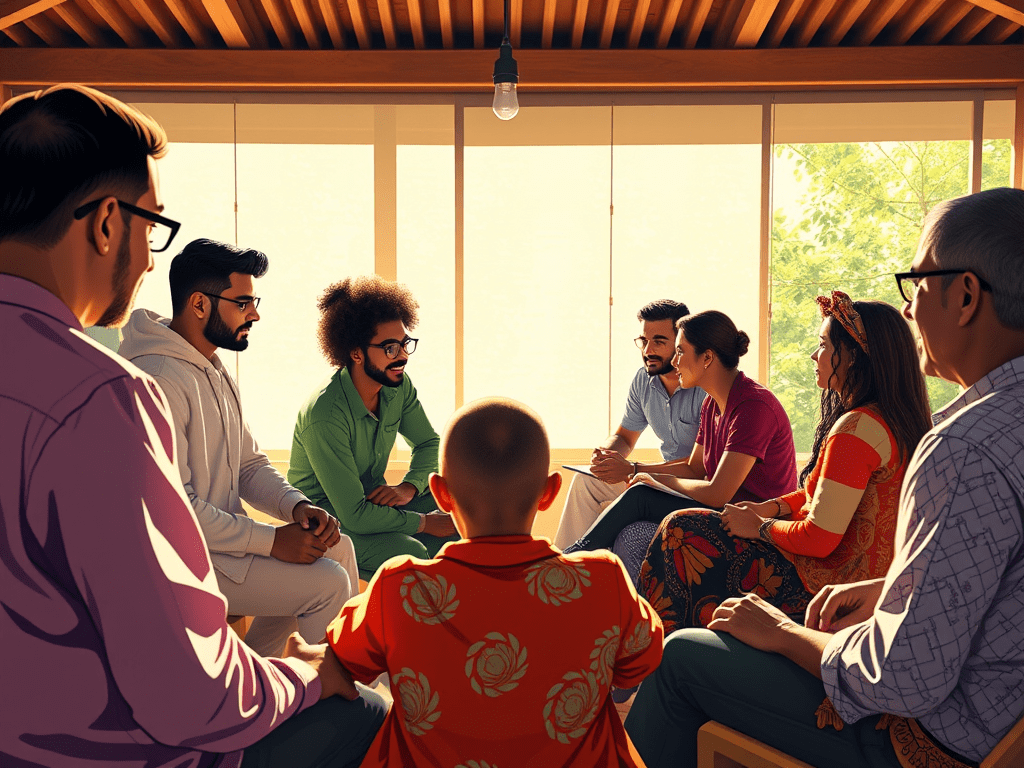
In an age dominated by standardized testing and passive learning, the Nyaya Sutra’s model offers a powerful alternative. Embracing debate as a form of examination can:
- Foster deeper understanding and critical thinking.
- Encourage respectful dialogue and openness to opposing views.
- Develop communication skills and intellectual resilience.
- Promote a culture where truth and reason prevail over mere victory.
Conclusion: The Path to a New Golden Age
The Golden Age of Bharat was made possible by a culture that revered knowledge and debate. The Nyaya Sutra’s sixteen categories provide a timeless framework for this intellectual tradition. By reviving the art of debate as a method of examination and learning, modern society can aspire to a renaissance of wisdom, innovation, and harmony.
In the pursuit of knowledge, let us remember that true understanding arises not from rote answers but from the dynamic exchange of ideas, rigorous reasoning, and the fearless quest for truth—the very essence of the Golden Age of Bharat.


 Rise of Kalki
Leave a comment