
Introduction: A Universe Within
What if the Big Bang didn’t just happen in the void of space, billions of years ago? What if it also happens within you, right now, in moments of silence, stillness, and deep self-awareness?
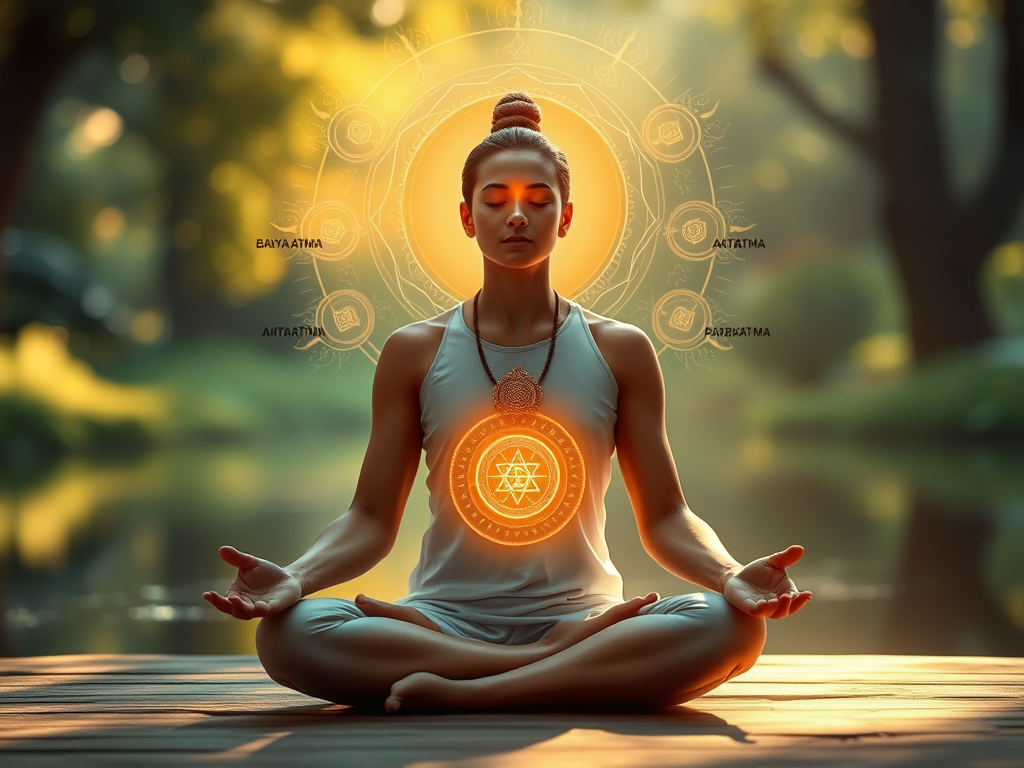
For thousands of years, Indian sages have described a striking experience within deep meditative states: a moment of inner genesis, where something profound stirs inside the mind and body. Energy begins to pulse, structures seem to form, and life unfolds from the inside out. This is not a metaphor or a hallucination. It is vivid, luminous, and more real than waking life. This moment, experienced in deep states like samadhi, can be called the “Inner Big Bang.”
It is the subjective witnessing of creation from within.
In this blog, we explore this ancient concept, rooted in yogic experience and Vedic wisdom, and offer a modern reinterpretation of what it means to perceive biology and creation directly through consciousness.
The Inner Big Bang: Defining the Experience
The “Inner Big Bang” is a term used to describe the internal, first-person experience of microcosmic creation. In deep meditative states, especially in practices like samadhi, practitioners often describe a sudden emergence of complexity from stillness:
- Light patterns that form geometrical structures
- Pulses of energy flowing through subtle channels
- Perception of cellular or atomic-like interactions
- An overwhelming sense of creation, movement, and birth
This is not just mystical poetry. Those who have experienced it often find it more vivid and structured than dreams. It is described as hyper-realistic, immersive, and meaningful, as if the meditator is watching the origins of life unfold from the inside.
The experience usually comes before any symbolic imagery. That is to say, you don’t first see deities or rituals. Instead, you feel or see raw creation: light, vibration, pattern, motion, pressure, expansion. The symbols come later, when the mind interprets or encodes what was seen.This concept is central to a growing movement of thinkers and practitioners who believe that the Vedas and Upanishads are not mythologies, but encoded descriptions of such inner experiences.
Ancient Perspectives: Vedic Symbolism as Inner Science
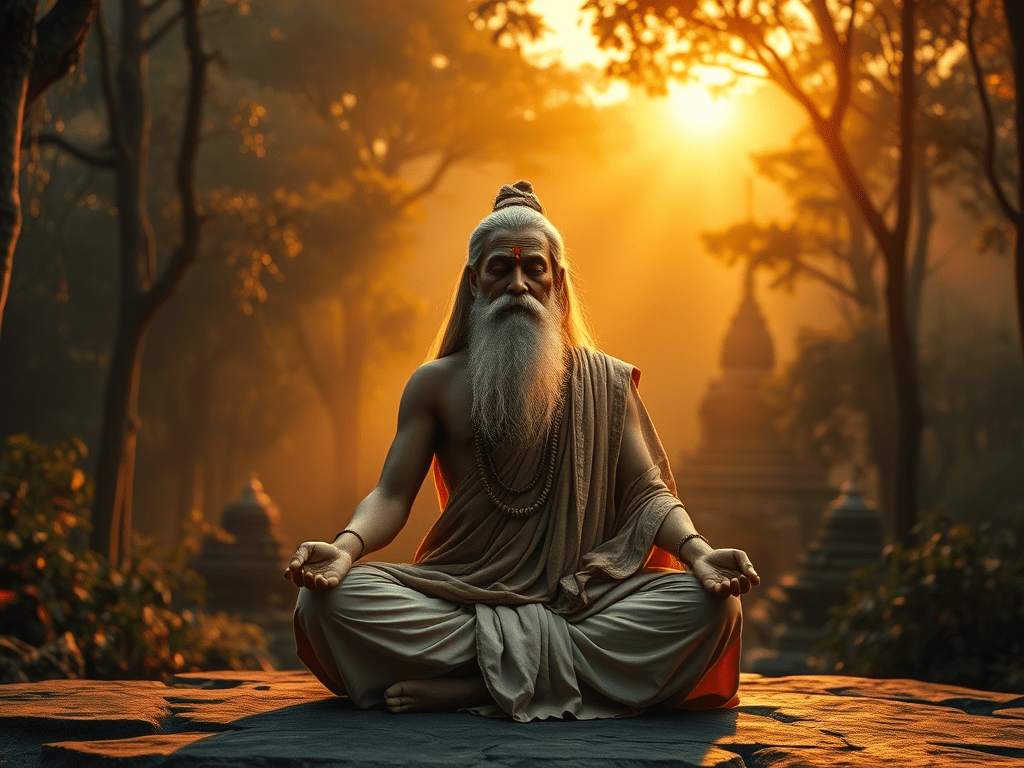
In the Rig Veda, we encounter hymns about the “Golden Womb” (Hiranyagarbha), the churning of the cosmic ocean, or the emergence of gods through fire, water, and breath. These have long been interpreted as cosmological or allegorical myths. But what if they describe a deeply personal, inward event?
In the Mandukya Upanishad, the states of consciousness are broken down into waking (jagrat), dreaming (svapna), deep sleep (sushupti), and the fourth state (turiya). Turiya is beyond these, the state of pure witnessing. In this state, ancient sages claim to have seen Brahman not as an idea, but as an unfolding process of energetic creation.
Yogic and Tantric texts speak of bindu (point), kundalini (inner energy), granthis (knots), and nadis (subtle channels). These symbols aren’t random. They point to stages, structures, and pathways that the consciousness travels when observing the inner biological reality.
In this model, deities are not just gods but symbolic representations of biological forces.
- Agni (fire) may represent cellular metabolism
- Soma could represent hormonal or neurochemical flow
- Indra might symbolize immune defense or neural alertness
The Vedic seers didn’t need a microscope. They became the microscope.
Consciousness as a Scientific Tool
In modern science, we often separate the observer from the observed. But in yogic science, the observer (the seer, the drashta) is the instrument. Through refined states of concentration (Dharana), meditation (Dhyana), and integration (Samyama), the inner world can be explored with as much precision as the outer world.
In a state of samadhi, the usual chatter of the mind falls silent. The boundary between subject and object dissolves. What remains is a lucid, awake awareness that sees directly into the nature of life. For some, this begins with an overwhelming feeling of expansion, contraction, or vibration. Others see luminous visions, flows of light, or even battle-like dynamics within.
These experiences can be consistent, repeatable, and structure-rich, which qualifies them as legitimate data points for a new form of science: inner science.
Today, disciplines like neurophenomenology and contemplative neuroscience are beginning to catch up to this idea. Scientists like Francisco Varela, Evan Thompson, and Daniel Goleman have proposed methods for blending first-person reports with third-person data collection (EEG, HRV, etc.).
The Vedic Inner Codex research builds on this bridge.
A Personal Glimpse: When It Happens to You
Many people engaged in symbolic or breath-based meditation may have glimpsed this Inner Big Bang without having the words for it. Here is a paraphrased journal excerpt from a meditator deeply immersed in Vedic visualization:
“At first there was nothing. Then, a pulse. A single beat of energy in the chest, then in the forehead. Suddenly, waves of light like silk folding in on itself. It wasn’t imagination. It was happening to me and within me. I watched a spiral form, then branch, like a tree of stars or nerves. Then came a vision of a circle split by fire, with something arising in the center. I knew it was me being created again.”
Moments like these mark a profound shift. The practitioner no longer seeks spiritual insight as abstract philosophy. It becomes a living, breathing experience.
Why the Inner Big Bang Matters
So why is this important? Why should we care about a vision that occurs in deep silence?
- It Revalidates Ancient Knowledge: The idea that rishis encoded real biological perceptions into mythic symbols gives new life to Indian spiritual heritage.
- It Reclaims Consciousness as Scientific: Consciousness becomes a precise tool for inner exploration rather than being passive or mystical.
- It Unifies Science and Spirit: The wall between science and spirituality crumbles when we recognize that subjective experience can reflect biological structure.
- It Inspires Personal Awakening: Knowing that you have access to the unfolding of creation within you can be a transformative realization.
How to Explore It Yourself
While advanced states like samadhi may take years of disciplined effort, the seeds of the Inner Big Bang can be planted with even simple practices:
- Symbol Meditation: Choose a Vedic symbol (like Agni, Soma, or Indra), learn its meaning, and meditate on it while visualizing light and flow.
- Silent Sitting: Practice sitting in total silence for 15–20 minutes. Focus not on doing, but on noticing what arises.
- Breath and Sound: To activate inner perception, use pranayama (like nadi shodhana) followed by chanting or humming.
- Keep a Journal: Note down images, feelings, and visions. Over time, patterns emerge.
Remember, the Inner Big Bang is not something you force. It happens when the ego dissolves, witnessing becomes pure, and consciousness turns inward without expectation.
Final Thoughts: You Are the Cosmos
We often look at the night sky, wondering, imagining the stars and galaxies as distant and unreachable. But what if the cosmos is not only out there? What if it is also within you?
The sages of India knew this. They spoke of Atman = Brahman. The self is the universe.
To witness the Inner Big Bang is to remember that your body, mind, and soul are not separate from the cosmos — they are the cosmos, folded inwards, waiting to be rediscovered.
So the next time you close your eyes in meditation, remember that you may not just find peace. You may be witnessing creation itself.
Let there be light. And let it begin from within.


 Rise of Kalki
Leave a comment